

The problem: measuring cycling sweat rate
Your bottle is empty while your riding partner's is still half full. You weigh less after a warm ride than before it. You want to know whether you drank too little. Perhaps you try to reach the same hourly amount on every ride.
Yet those rides can be very different.
Riding indoors without adequate cooling differs from being outside in the wind. An easy winter ride is not a warm climb. Clothing, effort and duration also change the conditions. Keep each sweat estimate alongside the ride it describes.
The aim is not to lose as little weight as possible. You want a clearer picture of your situation and practical drinking opportunities. A home measurement can help, but has limitations. Record what actually happened rather than keeping only a tidy final number.
This guide helps you measure without treating the result as a compulsory drinking target.
Background: an estimate, not a fixed requirement
Your mass after riding depends on more than sweat. Drinks and any urine contribute too. Wet clothing can distort the comparison. During longer exercise, other body stores change and mass is also lost through breathing.
A simple weighing test is therefore not a precise laboratory measurement.
Sports Dietitians Australia describes weighing around exercise as a tool for understanding fluid losses. Repeating measurements in different conditions makes the information more useful. Meaning comes from the pattern alongside ride details, not one universal value.
For a simple estimate, take mass lost in kilograms, add litres consumed and subtract measured urine. Divide by ride duration in hours. This approximates one kilogram of mass difference as one litre of fluid. It is a calculation convention for the estimate, not a complete account of every loss.
More drinking is not automatically better. The international consensus on excessive drinking during exercise warns about sustained intake above fluid losses. A calculated number must not force you to drink against your body's signals. Sports drinks do not make excessive drinking safe either.
Sweat volume also cannot reveal how much salt you lose. Salt concentration and fluid volume are different pieces of information. Do not derive a precise salt dose from body mass change alone. A sports dietitian can help with a personal plan for long, hot exercise.
Medication or a medical condition may require discussion with your treating clinician first.
How to approach it: measuring and preparing your ride
-
Choose an ordinary, easy ride: Record expected temperature, surface, effort and duration. Do not create a heat challenge or deliberately underdrink to produce a clearer result.
Plan access to drinks and a safe route home. Measuring must never replace normal precautions or become an exercise in testing your limits.
-
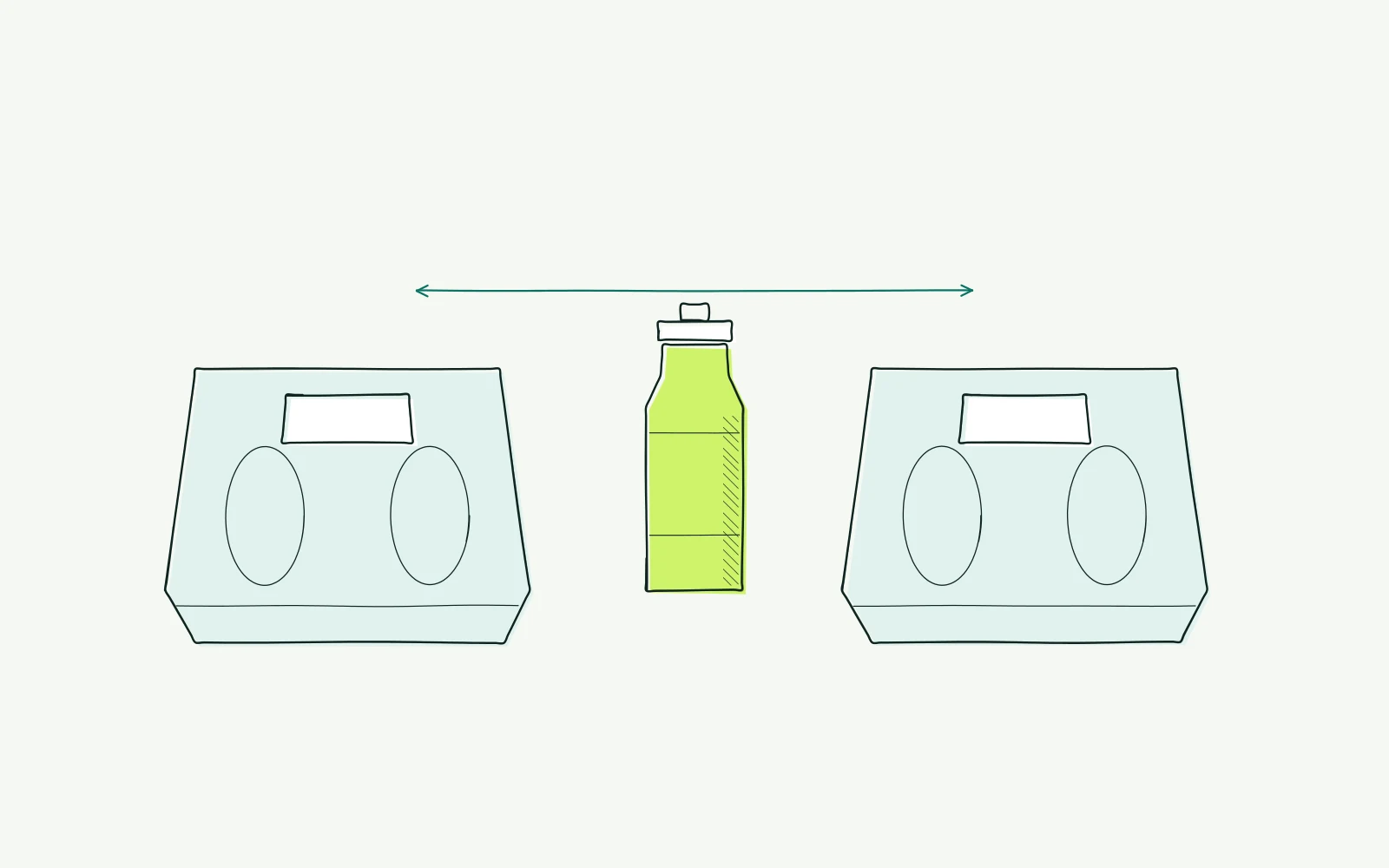
Make weighing comparable: Use the same scales on the same firm, level surface. Weigh close to the start and finish in minimal, dry clothing and towel off visible sweat.
Record kilograms as displayed. Avoid unknowingly including wet shoes or a full pocket in only one of the measurements.
-
Record intake and time: Measure bottle contents before and afterwards, for example with a measuring jug. Record millilitres actually consumed, not just the volume carried. Keep water poured over yourself separate.
Record ride duration in hours and any measured urine; where information is missing, describe the uncertainty rather than guessing a value.
-
Calculate and check the estimate: Convert millilitres to litres and use the described relationship with mass change. Check the units before saving the result. An implausible value calls for checking your notes first.
Use the fuel and hydration calculator to prepare for a ride, not to diagnose a fluid-related problem.
-
Repeat without turning drinking into a contest: Compare two to three easy rides in similar conditions if you feel well. Change at most one practical factor, such as bottle access. Record any changes in volume separately in millilitres.
Discuss a position that makes drinking awkward with a fitter. Do not force intake to achieve a calculated number.
-
Stop when illness develops: Return to your usual safe routine if things worsen and seek professional advice. Stop exercising with clear signs of illness; confusion, collapse or becoming seriously unwell requires immediate medical help.
Persistent symptoms, swelling or pain at rest or at night need clinical assessment. This is not a situation for another three or four setup experiments. Do not try to resolve those signs yourself by simply taking more water or salt.
Further reading
- Cycling nutrition and hydration helps you plan fluid and fuel separately when preparing for a longer ride.
- Gravel bike fit discusses position and control when you need to move and drink safely on uneven ground.
- Bike fitting science explains why a measured value must be read alongside its method and surrounding conditions.
- Online bike fit limitations helps identify when an online tool does not provide enough information.
- The fuel and hydration calculator offers a practical starting point alongside your own ride notes and experience.
Frequently asked questions
Is weight lost after cycling the same as fat lost?
No. A difference across one ride cannot be interpreted as fat loss. Fluid, drinks and other factors affect the measurement.
Use weighing only for the question you are investigating. It is not a target to lose as much weight as possible during exercise or a measure of successful training.
Should I drink my entire estimated loss during the ride?
Not automatically. The estimate describes conditions and includes measurement uncertainty. It is not a compulsory minimum intake. Avoid forced drinking and discuss an individual plan for long or hot exercise with a sports dietitian.
Consider practical drinking opportunities, experience and medical circumstances before following a schedule.
Can I use a winter measurement for a warm holiday ride?
Keep it as a comparison, not a prediction. Temperature, effort, clothing and cooling may differ substantially. Gather information safely in conditions closer to the planned ride. An unexpectedly warm or demanding situation calls for caution, not rigid adherence to an old number that described another day.
Does this test tell me how much sodium I need?
No. It does not measure the sodium concentration of sweat. A larger estimated fluid loss therefore does not establish a precise salt requirement.
Keep fluid planning and sodium advice distinct. Ask a sports dietitian for guidance when you need an individual long-duration plan or repeatedly experience symptoms.
This guide covers one part of your riding position. Read how bike fitting connects your measurements and bike setup.
Use your ride information to prepare food and drinks deliberately.
Plan fuel and hydration