

The problem: knee pain when cycling
Your knee feels uncomfortable while pedalling. Perhaps it starts on a climb, after a longer ride or since changing shoes. You notice it at the front, back or one side. Sometimes only one knee is affected.
That pattern is useful to record. Write down when it begins and whether you also have symptoms away from cycling. Do not simply compare the painful spot with another rider's experience. Similar descriptions can have different explanations.
A bike that previously felt comfortable does not rule out a problem. Your rides may have become longer or harder. After a break, your old training week is not automatically an appropriate starting point.
This guide helps you organise questions about your setup. It cannot identify which tissue is sensitive. You do not need to tolerate pain to prove that a new position works. Record what happens and stop the comparison when symptoms appear.
Background: your knee, saddle and riding load
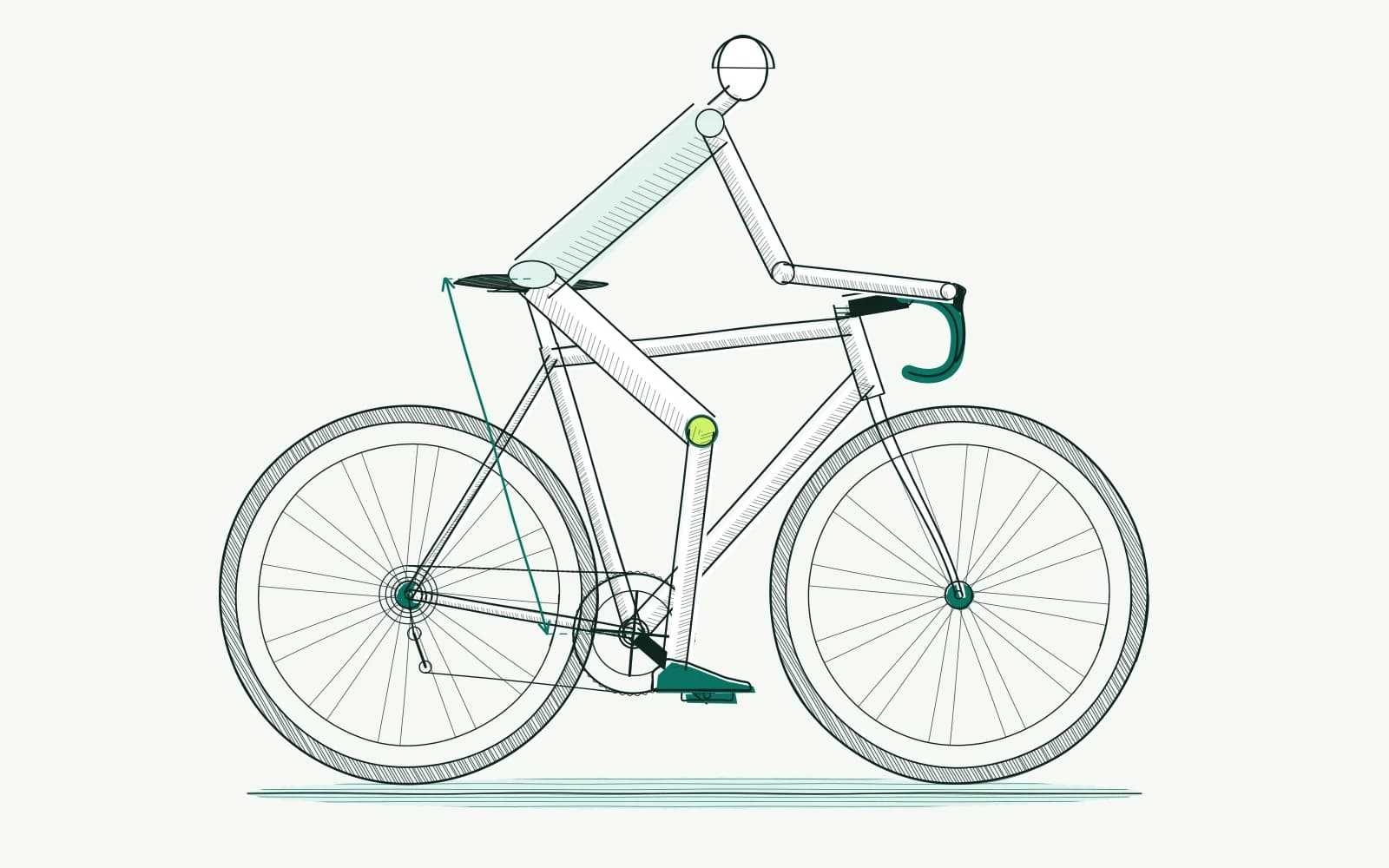
The distance between your hip and foot changes through each pedal revolution. Saddle height, setback and crank length influence that movement together. A higher saddle increases the distance you need to reach near the bottom. A lower saddle reduces that distance.
That alone does not tell you which position suits you.
Your foot is another contact point. A different sole, pedal or cleat can change the relationship between your foot and bike. Comparing saddle height alone may therefore miss an important difference. Record which shoes and pedals you used with that measurement.
A familiar rule immediately links pain at the front to a low saddle. That association is not a reliable personal diagnosis. Pain location does not justify a fixed correction of several millimetres either. Without assessing your movement and symptoms, the explanation remains uncertain.
Riding load belongs in the same discussion. Consider a new route, more climbing or a different gear. A fall, previous injury and symptoms while walking also matter to a clinician. A fitter can assess your cycling position but cannot replace medical assessment.
A stationary photograph shows only one moment. It cannot show how much riding load your knee can tolerate. A calculator cannot diagnose the problem either. Use its output as a measurement reference and discuss large differences before adopting them.
The aim is a comparison you can evaluate, not a number you must achieve despite pain.
How to approach it with bike fitting
-
Start with a symptom record: Note which knee hurts and where you feel discomfort. Write down the activity, when symptoms begin and any recent changes. Include pain while walking, resting or sleeping. Stop the ride when pain appears; a test is not an instruction to provoke symptoms.
-
Keep your starting position: Hold the bike upright and take a clear side photograph. Use a tape measure from the centre of the bottom bracket to the same point on the saddle top. Record that distance in millimetres, alongside your shoes, pedals and saddle rail position. Mark the original seatpost position with removable tape without covering safety markings.
-
Check what actually changed: Compare your notes with the previous comfortable setup. Remember shoe soles, cleats and riding load too. Do not change saddle height, setback and cleats together. Ask a mechanic to check component security if you are unsure about it.
-
Use a calculation as a discussion point: Enter your measured inseam in the saddle height calculator. Compare its starting recommendation with your measurement. A difference does not explain knee pain or justify a large adjustment.
When symptoms are present, discuss which single change makes sense with a fitter first. A comparison of, for example, 2–3 mm of saddle height is small and reversible, not a treatment or fixed recommendation.
-
Test within clear limits: If there is no reason for medical assessment first, compare one agreed change. Use two to three easy, comparable rides only while you remain symptom-free. Keep shoes, route and effort as consistent as possible.
Record the difference and restore the safely recorded original position if things worsen. Follow component instructions and tightening torque during installation.
-
Recognise warning signs: Seek urgent medical assessment for sudden severe pain, inability to bear weight, major swelling or a locking knee. The same applies to a hot, red knee with fever, as described in NHS knee pain advice. Contact a clinician for pain at rest, night pain or radiating tingling. If mild symptoms remain after three to four careful adjustments, involve a fitter and clinician; do not wait through that sequence when warning signs occur.
Further reading
- Saddle height helps you record a repeatable measurement before changing your position on the bike.
- Cleat position explains which foot settings to record before making a careful comparison.
- Pedal stance width explains why lateral space cannot be inferred from pain location alone.
- Bike fit for beginners helps you consider setup and a gradual return to riding separately.
- The saddle height calculator provides a measurement reference rather than an explanation or treatment for knee pain.
Frequently asked questions
Can I assess my knee using a video?
A video can show what you do while pedalling. Record it safely without provoking pain. It cannot diagnose a condition or measure the load inside your knee. Bring it as additional information, alongside your symptom history and the changes you have made to the bike.
Should both cleats have exactly the same position?
A matching starting position is easy to record, but does not prove both feet need exactly the same setting. Do not rotate one cleat solely because one knee hurts. Have foot position, available movement and safe operation considered together before trying to correct an apparent difference.
Can I continue my previous racing schedule?
Do not treat a setup experiment as permission to train through pain. Record which activities cause symptoms and discuss your next steps with a clinician if pain persists. A fitter can help assess your riding position but cannot remotely determine which training load is medically appropriate for you.
What should I bring to an appointment?
Bring your bike, normal cycling shoes and original measurements. Add symptom notes and recent changes. Explain whether walking or sleeping also causes pain. Mention earlier injuries and what happened after each adjustment; this helps the assessment start with useful information rather than random changes to the bicycle.
This guide covers one part of your riding position. Read how bike fitting connects your measurements and bike setup.
Record your measurements and use the calculation only as the starting point for a careful position check.
Calculate your saddle height