

Science
Stack and Reach Explained
Stack and reach provide a consistent way to compare bike frames across brands without relying on inconsistent size labels or legacy fit shorthand.
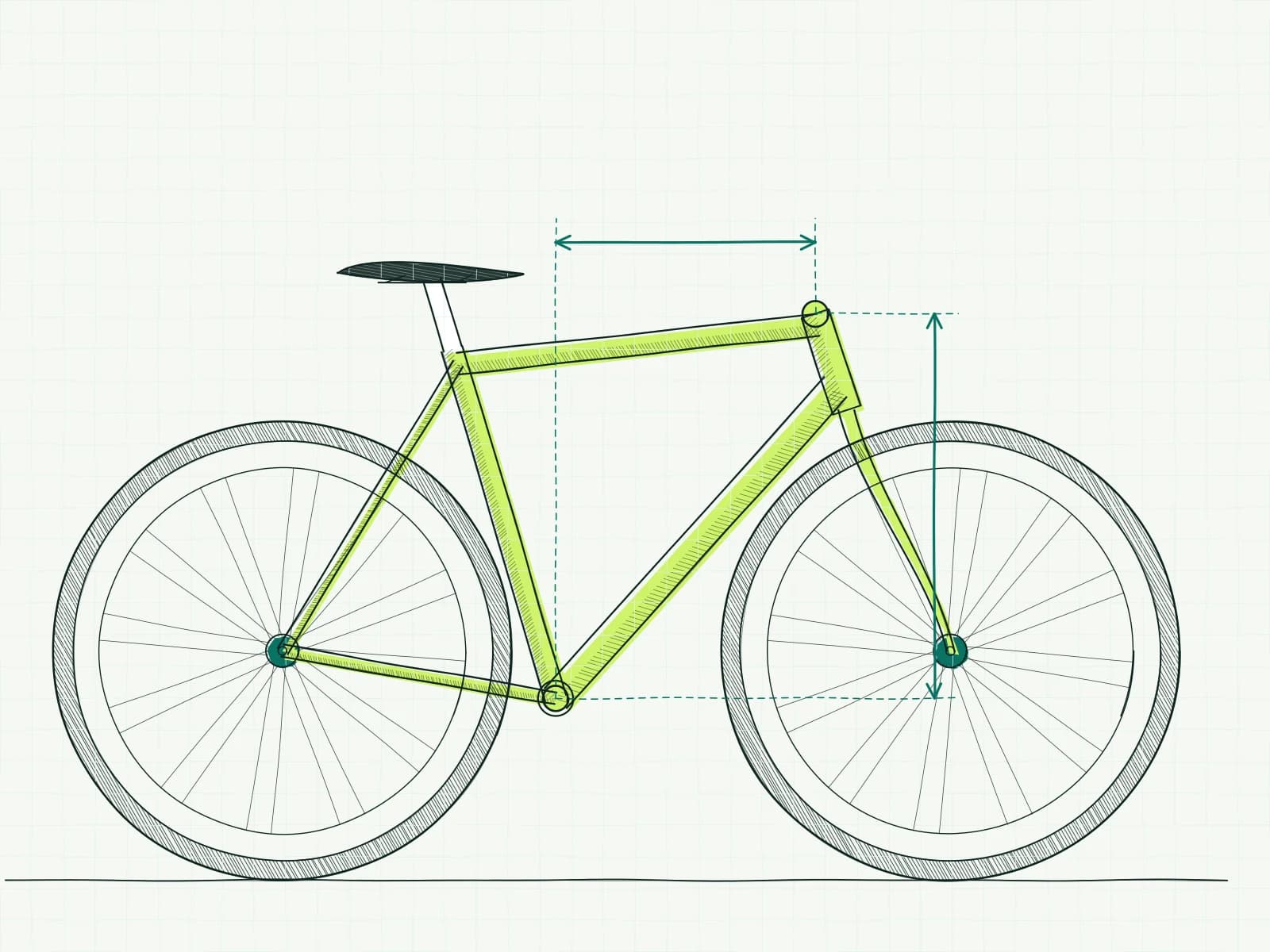
These two coordinates say more about rider position than a nominal frame size alone.
Core concepts
The geometry references that actually travel between frames
Seat-tube sizing hides too much variation. Stack and reach give you a cleaner baseline when you want to compare positions from one frame to another.
What is stack?
Stack is the vertical distance from the bottom bracket to the top center of the head tube. Higher stack generally means a more upright riding posture.
What is reach?
Reach is the horizontal distance from the bottom bracket to the same head-tube reference point. Longer reach usually creates a more stretched cockpit.
Why it matters
Stack and reach reflect real rider position and are the best baseline when matching a frame to fit targets.
Continue reading
Put the explanation into practice.
Use your measurements as a starting point, then test your position on the bike.